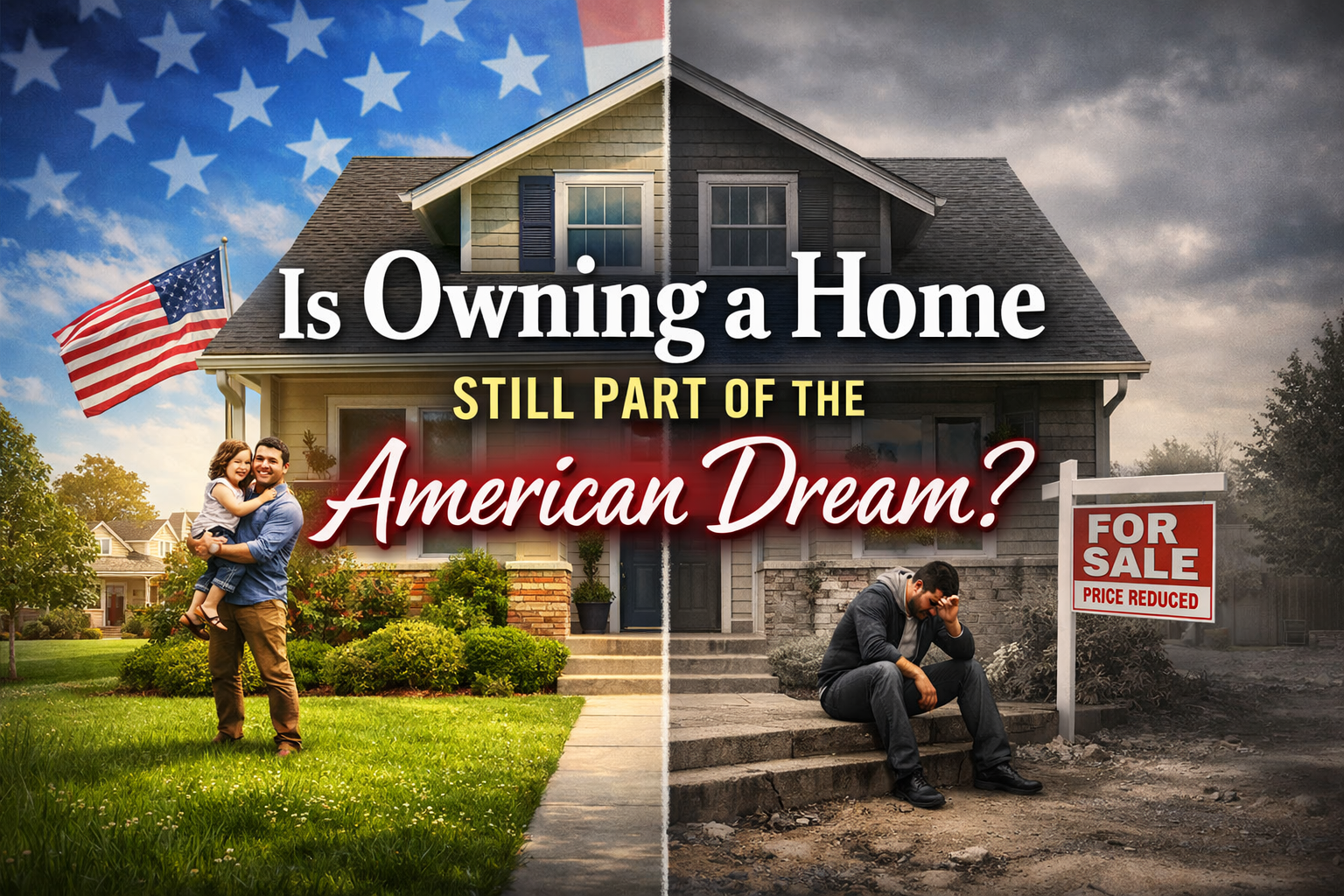
Scroll TikTok long enough and it’s easy to believe the American Dream has changed.
Twenty-something creators buying Lamborghinis. YouTubers making seven figures filming pranks. Crypto success stories that sound like overnight miracles. If that’s the new path to wealth, where does buying a home even fit anymore?
For younger buyers—especially those just starting their careers—the question isn’t just “Can I afford a home?”
It’s “Is owning one even worth it anymore?”
I believe the answer is still yes. Strongly yes.
And not because it’s trendy—but because the data, history, and lived experience all point in the same direction.
The Quiet Truth About American Wealth
Here’s a stat that doesn’t get enough attention:
The majority of wealth held by American households is tied to real estate.
Not stocks. Not crypto. Not businesses started in dorm rooms.
According to Federal Reserve data, home equity represents the single largest source of net worth for middle-class Americans. Even today. Even after rate hikes. Even with prices higher than they used to be.
Why?
Because real estate does something most flashy wealth vehicles don’t:
-
It forces consistency
-
It rewards patience
-
It compounds quietly over time
You don’t need to “go viral” to build wealth through housing. You need time.
The Myth of Perfect Timing
One of the biggest mental roadblocks I see with first-time buyers is this idea that they have to “get it exactly right.”
-
Rates need to come down first
-
Prices need to soften first
-
The market needs to feel safer
Here’s the reality: almost no one buys their first home at the perfect time.
What matters far more than timing the market is time in the market.
Run the numbers over 10, 20, or 30 years and the pattern is clear:
-
Homes appreciate
-
Rents rise
-
Mortgages eventually feel smaller, not bigger
-
Equity builds whether you think about it or not
Waiting for the perfect moment often means missing years of ownership—years where someone else is paying down their loan while you’re paying rent.
“But Things Are Different Now”
That’s true. And they always have been.
Every generation feels like the deck is stacked against them:
-
Boomers dealt with double-digit interest rates
-
Gen X bought during recessions
-
Millennials faced the aftermath of the financial crisis
-
Gen Z is navigating affordability, student debt, and social media pressure
Different obstacles. Same outcome for those who got in and stayed in.
The fundamentals haven’t changed:
-
Land is finite
-
Population grows
-
Desirable locations remain desirable
-
Housing remains a necessity, not a luxury
Even in an age where a small percentage of creators make millions online, the majority of Americans still build wealth the slow, boring, effective way—through owning where they live.
Homeownership Isn’t Just Financial
This part gets overlooked.
Owning a home isn’t only about appreciation charts and net worth spreadsheets. It’s also about:
-
Stability
-
Control
-
Predictability in a world that offers very little of it
Rent goes up because someone else decides it should.
Ownership gives you a fixed payment and optionality.
You don’t need to “love” your first home. It doesn’t have to be perfect. It’s often a stepping stone—not the destination.
But it’s your stepping stone.
A Message to Younger Buyers
If you’re early in your career, your biggest advantage isn’t your income—it’s your time horizon.
A modest home owned for 10–15 years often does more for long-term financial health than:
-
Trying to out-invest the market
-
Waiting for a windfall
-
Hoping the system suddenly changes
Real estate rewards people who start before they feel “ready.”
Not because it’s easy—but because it’s durable.
The Dream Hasn’t Disappeared—It’s Just Quieter
The American Dream was never about instant wealth.
It was about progress. Ownership. Stability. Optionality.
That hasn’t gone away.
It’s just harder to see when the loudest voices online are selling shortcuts instead of showing the long road that actually works.
Owning a home may not feel glamorous in the moment—but decades later, it’s often the difference between financial stress and financial flexibility.
And that still sounds like a dream worth chasing.